
Featured projects → Emergency licenses and the pandemic teacher pipeline
Past project: Emergency licenses and the pandemic teacher pipeline
How WEPC’s partnership with Massachusetts education leaders revealed what happens when traditional barriers to teaching are temporarily lifted.
The challenge
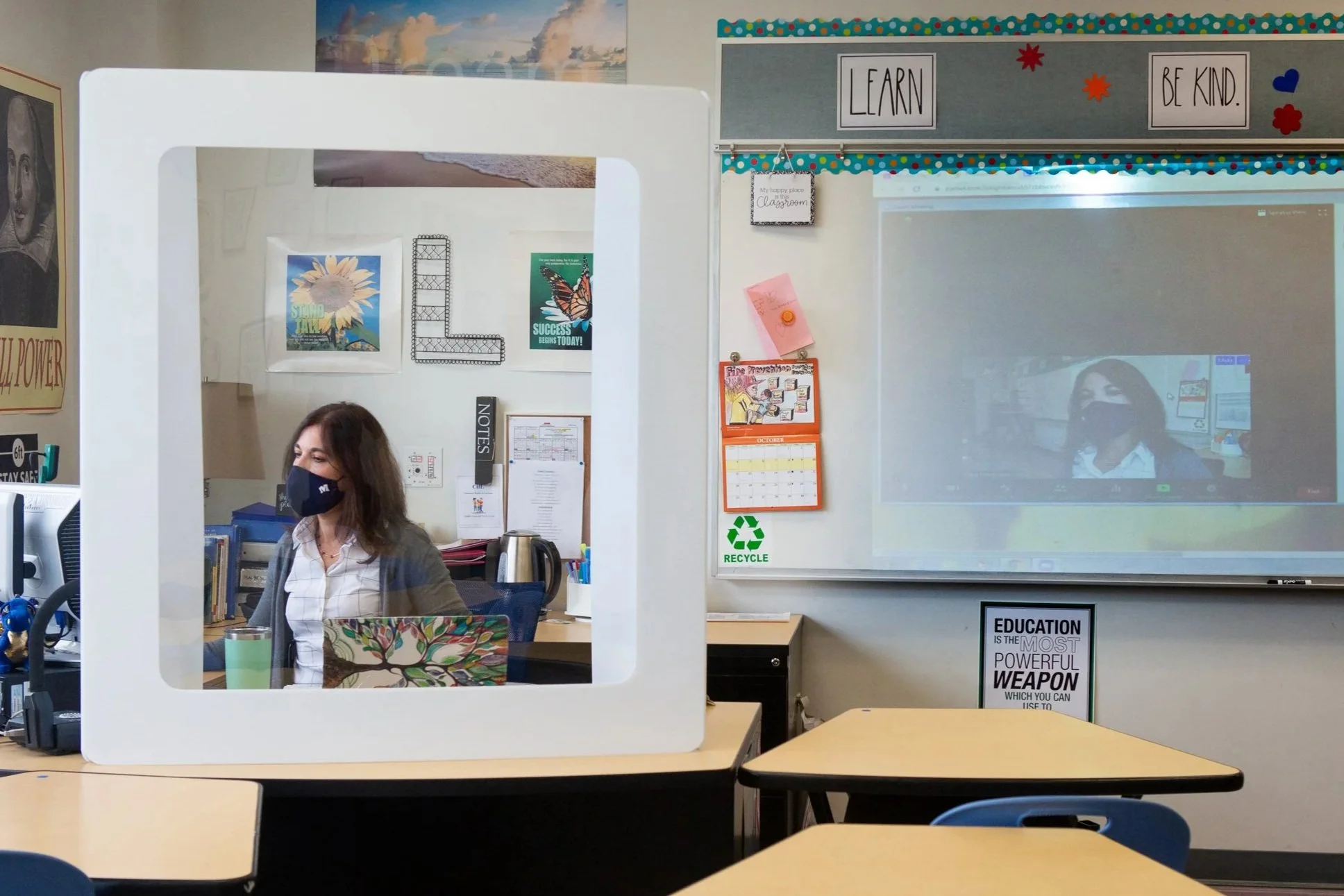
In spring 2020, COVID-19 closed schools and halted the usual path into teaching. Student teachers could no longer reach their classrooms, and licensure test centers shut their doors. With entry into the profession at a standstill, Massachusetts faced the prospect of a serious teacher shortage.
In June 2020, the state created an emergency license that allowed people with a bachelor’s degree to begin teaching while delaying, not eliminating, traditional requirements like licensure exams and preparation programs. The change was unprecedented, and it raised pressing questions. Who would use this new pathway? Would schools hire them? And would students be well served by teachers who had not yet met the usual standards?
Our work
The Massachusetts Department of Elementary and Secondary Education (DESE) partnered with WEPC to study the emergency license as it unfolded. Over two years, WEPC researchers analyzed state data on thousands of emergency license holders, surveyed more than 1,300 of these teachers, and surveyed the school leaders who hired them.
With this data, our researchers looked at the following questions:
Who applied for and was hired on an emergency license?
How did emergency-licensed teachers perform compared to other new teachers?
Did emergency-licensed teachers stay in the classroom, and what challenges did they face in earning a full license?
Results
The emergency license did what it was designed to do: it kept new teachers flowing into Massachusetts classrooms during the pandemic, with no evidence of harm to students.
In its first year, about 5,800 people earned an emergency license, helping the state reach its highest number of new teaching licenses in at least a decade. These teachers were more racially diverse than other new hires, often filled hard-to-staff roles like special education, performed similarly to other new teachers, and stayed at similar rates. Their biggest obstacle was finding the time and money to complete full licensure requirements.
The findings gave state leaders evidence that flexible entry paths can strengthen the teacher workforce, and showed that targeted support is key to keeping these teachers in the classroom.



Get in touch
Looking for a research partner who can grow with your priorities?
Let’s talk about the questions you’re trying to answer and what a long-term partnership with WEPC could look like specifically for you.
→ Reach out to us: wheelockpolicy@bu.edu