
Featured projects → EVALUATING BARRIERS TO BECOMING A TEACHER IN CONNECTICUT
Past project: Evaluating barriers to becoming a teacher in Connecticut
How a partnership with WEPC helped state leaders use evidence to open new pathways into teaching while protecting teacher quality.

The challenge
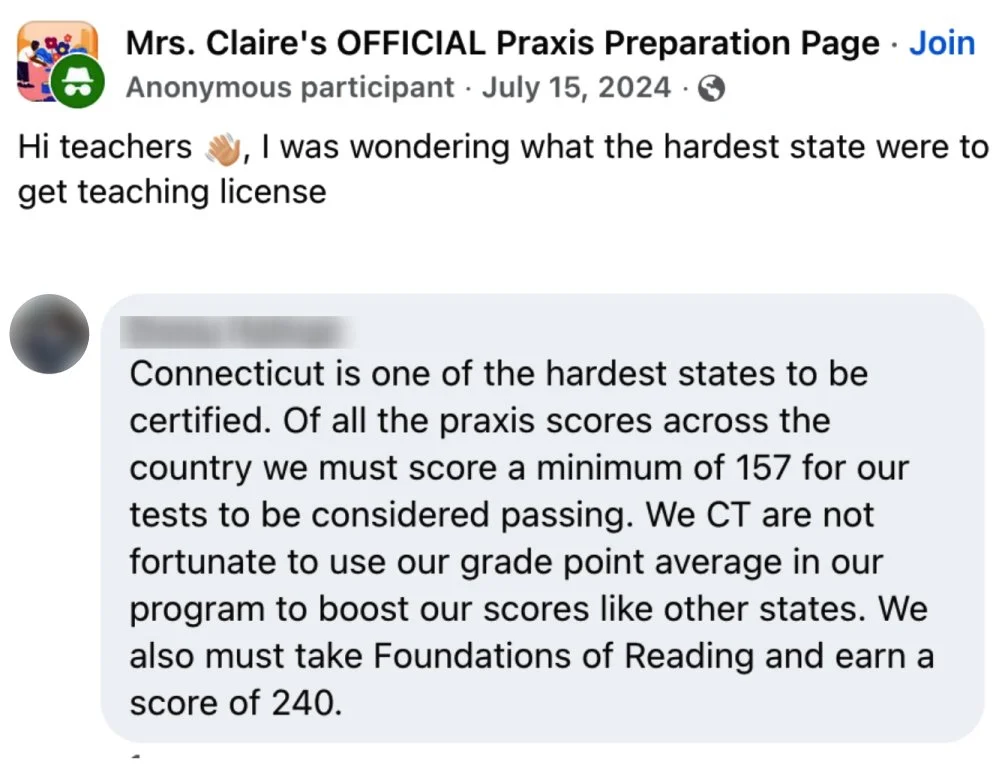
Connecticut schools were struggling to find teachers, particularly in math and science — yet district leaders were seeing promising candidates kept out of the classroom after falling short on the state’s licensure tests.
State policymakers were considering making certification requirements more flexible, but the stakes were high and the path forward nuanced.
Leaders needed evidence grounded in Connecticut’s own context before making the call.
Our work
The Connecticut State Department of Education had more than two decades of rich state data, but needed additional research capacity to connect that information to the policy questions in front of them.
Because WEPC already had a strong partnership with the state, we were able to move quickly. Together, we focused the research on two questions:
Were licensure tests creating barriers to entering the teaching procession?
Were those tests actually predicting which candidates would become effective teachers?
WEPC analyzed more than 20 years of data to understand how test performance affected candidates’ likelihood of becoming certified — and whether those scores were associated with later success in the classroom.
Results
The evidence revealed a consequential disconnect: the tests shaped who entered the profession, but did little to predict who would succeed once they got there.
Candidates who barely passed on their first attempt were substantially more likely to become certified than those who barely missed the cutoff — a deterrent effect that was even stronger in STEM fields. WEPC estimated that even a small reduction in the passing score could result in roughly 25 additional certified teachers each year.
The findings gave state leaders evidence they could act on. Citing WEPC’s research, Connecticut adopted more flexible pathways to certification, which helped remove unnecessary barriers to teaching while giving policymakers confidence that changing the requirements did not mean sacrificing quality.

Get in touch
Looking for a research partner who can grow with your priorities?
Let’s talk about the questions you’re trying to answer and what a long-term partnership with WEPC could look like specifically for you.
→ Reach out to us: wheelockpolicy@bu.edu